Rechercher dans ce blog

Saturday, August 27, 2022

Apple's iPhone 14 Pro Max Will Need to Justify its Higher Price. Here's Why - CNET

What's happening

Apple is expected to add another 6.7-inch iPhone to its lineup this year. This phone will reportedly be a larger version of the standard iPhone 14.

Why it matters

Adding another 6.7-inch iPhone to the mix could detract from the iPhone 14 Pro Max's appeal. Especially as consumers are cutting back on spending.

What's next

Apple is holding an event on Sept. 7, where it's expected to unveil new iPhone models.

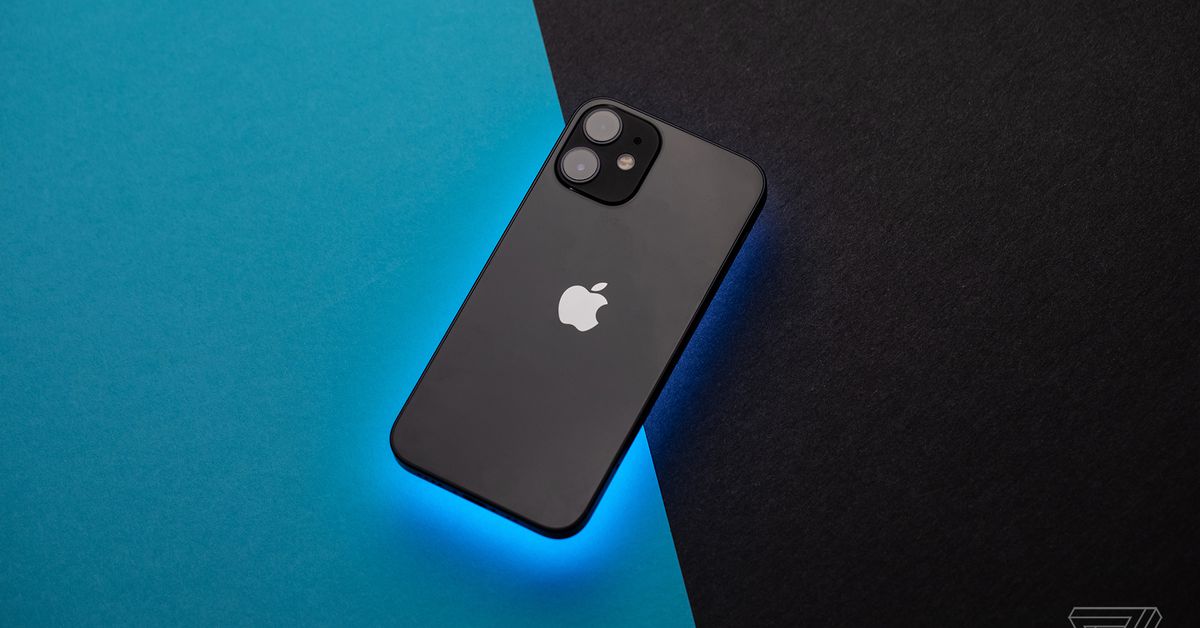
Apple's rumored iPhone 14 Pro Max is expected to have a higher resolution camera, a new processor and a giant 6.7-inch screen like the current iPhone 13 Pro Max. While those sound like welcome improvements, Apple needs to do more to make its top-of-the-line iPhone stand out. 

That's because the iPhone 14 Pro Max won't be the only super-sized iPhone in Apple's lineup anymore, if the rumors are to be believed. Apple is expected to release a 6.7-inch iPhone 14 Max as well this year, meaning those who love large screens won't have to splurge on the Pro Max just to get a bigger display. 

Aside from the difference in screen size, there's typically little that separates Apple's "Pro" iPhones from its "Pro Max'' devices. I'm hoping that changes with the Phone 14 Pro Max, which we're expecting to learn about during Apple's upcoming Sept. 7 event. With inflation putting a dent in smartphone shipments, companies like Apple may have to work harder to convince consumers to spend more on high-end devices. 

iPhone 14 Pro Max: What to expect

If Apple does release an iPhone 14 Pro Max in September, it's likely to be a sequel to Apple's current iPhone 13 Pro Max. As such, it will probably have a 6.7-inch screen and a triple-lens camera that includes wide, ultrawide and telephoto lenses. In an effort to further distinguish its Pro iPhones from its standard iPhones, Apple will reportedly give the iPhone 14 Pro and Pro Max an upgraded 48-megapixel camera sensor, a faster A16 Bionic chip and a redesigned camera module on the front that removes the notch. 

These features are said to be exclusive to the iPhone 14 Pro and Pro Max, meaning they won't appear on the standard iPhone 14 and iPhone 14 Max. That's all according to reports from Bloomberg's Mark Gurman and TF International Securities analyst Ming-Chi Kuo, both of which have strong track records when it comes to reporting on unreleased Apple products.

Provided Apple maintains its current pricing structure, the iPhone 14 Pro Max will likely start at $1,100 for the 128GB model. The iPhone 14 Pro will likely begin at $1,000.

Why the iPhone 14 Pro Max needs to stand out

If the reports turn out to be true, the iPhone 14 Pro and Pro Max could include one of the biggest camera improvements we've seen on the iPhone in years. That alone could make them appealing to those in the market for a new device. 

The problem, however, is that the iPhone 14 Pro Max could end up getting lost in the shuffle. Shoppers who just care about having the best camera could get by with the cheaper iPhone 14 Pro, while those who primarily want a large screen may opt for the rumored iPhone 14 Max. Both devices will likely be cheaper than the iPhone 14 Pro Max. 

The launch would also come at a time when people are seemingly spending less on mobile devices and being more careful about their purchases. Smartphone shipments are expected to decline by 3.5% in 2022, according to estimates from the International Data Corporation published in June. The NPD Group reported in May that more than eight in 10 consumers are planning to reassess their product spending in the next three to six months. A recent NPD survey also indicated consumers plan to seek less-expensive items, look for promotions and cut back on overall purchases in the next few months. 

These factors could make it more difficult to convince consumers to spend more than $1,000 on a new phone, especially when they may be able to get some of the same benefits (a larger screen or a triple-lens camera) on cheaper models. With the iPhone 14 Pro Max, Apple would likely be counting on the fact that consumers are willing to pay a premium to get both a larger screen and a better camera.

How Apple could make the iPhone 14 Pro Max feel special

There are a few things Apple could do to make the iPhone 14 Pro Max stand out alongside the regular iPhone 14 Pro and iPhone 14 Max. As I've written in the past, I'd love to see Apple implement iPad-like software features that make better use of the Pro Max's giant screen. For example, it could add a multitasking mode that makes it easier to view more than one app simultaneously. I'd also like to see an always-on display option, similar to the one available on newer Apple Watch models and many competing Android phones. 

Samsung has done a better job of distinguishing its premium Galaxy S22 Ultra from the regular Galaxy S22 and S22 Plus. Even though the $1,200 Galaxy S22 Ultra is likely too expensive for most people, it offers distinct features you can't get on Samsung's less-expensive models. The Ultra has a built-in stylus for notetaking and drawing, a 6.8-inch screen that's larger than any other phone in Samsung's S22 lineup, a higher resolution 40-megapixel selfie camera and main camera system with two telephoto lenses and a 10-times optical zoom.

None of those characteristics are available on Samsung's other S22 devices, including the $1,000 Galaxy S22 Plus. The iPhone 13 Pro Max, by comparison, has a lot in common with the iPhone 13 Pro, aside from its larger screen and longer battery life. In other words, Apple is relying on the iPhone 13 Pro Max's 6.7-inch screen to distinguish it from the regular Pro. 

But if Apple does release a 6.7-inch version of the standard iPhone, just as reports from Nikkei Asian Review, Bloomberg and Ming-Chi Kuo indicate, the iPhone 14 Pro Max might feel less unique in this year's lineup. The rumored iPhone 14 Max likely won't have the same extras as Apple's Pro iPhones, such as a triple-lens camera and a screen with a higher refresh rate for smoother scrolling. But it might be compelling enough to entice shoppers that simply want a larger screen and don't care as much about having a telephoto lens. 

Regardless, the iPhone 14 Pro Max will be a top seller if its predecessors are any indication. The iPhone 13 Pro Max landed in the top five smartphone models in regions such as the US, UK, France, Germany and China, according to Counterpoint Research. The iPhone 12 Pro Max was also the second best-selling phone globally in 2021, Counterpoint Research also reported. 

Still, until a foldable iPhone comes along, the iPhone Pro Max will be Apple's most expensive and most premium iPhone. That also means it should be the best showcase of Apple's technology, which is why I'd like to see more exclusive features that you can't get elsewhere.

Adblock test (Why?)

Article From & Read More ( Apple's iPhone 14 Pro Max Will Need to Justify its Higher Price. Here's Why - CNET )
https://ift.tt/14YLrEB
Technology
Friday, August 26, 2022

We haven't seen Tensor 2, but Tensor 3 is already reportedly in development - Android Authority

Google Tensor SoC

TL;DR

  • Samsung is reportedly working on two new chips.
  • One of the chips could be the third generation of Google’s Tensor chip.
  • The other chip may be a successor to the Galaxy A53’s Exynos 1280.

Google may be working in collaboration with Samsung on its next system on a chip (SoC), which could be the Tensor 3 or possibly a Tensor 2.5. Samsung may also be working on its own in-house chip, a successor to the Exynos 1280.

According to a rumor from GalaxyClub, Samsung is in the process of working on two new chipsets. One of those new chipsets carries the model number S5P9865. This pattern seems to mimic the previous model numbers in the Tensor line, with the original Tensor model number being S5P9845 and Tensor 2 believed to have the model number S5P9855.

In addition to the model number, it’s believed that the chip is being tested under the dev board name of “Ripcurrent.” You can compare this to the code name reportedly given to the Tensor 2 — “Cloudripper.”

The rumor also suggests that Samsung is working on a future chip of its own. Said chip is believed to be a successor to the Exynos 1280 processor found in the Samsung Galaxy A53. Like the rumored Tensor chip, this SoC mimics the model number pattern of the previous chip, with the 1280 chip having the number S5E8825 and the new chip having the number S5E8835. Possibly named the Exynos 1380, the chip could possibly find its way into next year’s Galaxy A54.

It’s important to keep in mind that all of this is just a rumor and should be treated as such.

As for the Tensor 2, which will be in the upcoming Pixel 7, a leak we reported on late last month suggests the chip is likely sticking with older CPU cores like the Cortex-A78 and Cortex-X1. This means Tensor 2 could be lagging behind current flagship SoCs when it releases. If that’s the case, a Tensor 2.5 chip could help Google catch up to current flagship SoCs sooner than later.

Adblock test (Why?)

Article From & Read More ( We haven't seen Tensor 2, but Tensor 3 is already reportedly in development - Android Authority )
https://ift.tt/hYxi8BK
Technology

Galaxy Buds 2 Pro review: Big sound in a tiny package - Engadget

At this point, Samsung has a lot of experience making true wireless earbuds. While the company flexed its design muscle early with the Galaxy Buds line, it hasn’t always nailed the details. It rebounded quickly with its second installment, the Galaxy Buds+, and since then Samsung has continued to refine its aesthetic, improve sound quality and add handy features. It even found time for a polarizing open-wear model with the Galaxy Buds Live.

While the leguminous Live were the first of Samsung’s earbuds to include active noise cancellation (ANC), the open design rendered the feature ineffective. With the Galaxy Buds Pro that debuted early last year, the company finally delivered true ANC, but there was room for improvement in terms of both noise blocking and overall audio quality. Now Samsung is back with version 2.0 of its flagship earbuds, the Galaxy Buds 2 Pro ($230). This set is not only smaller and more comfortable, but they showcase the massive gains the company has made over the last year and a half. However, the most attractive features are reserved for the Samsung faithful.

Critics - Not yet scored

Users - Not yet scored

Galaxy Buds 2 Pro

Pros

  • Great sound
  • Better fit
  • Improved ANC

Cons

  • Samsung-exclusive features
  • Battery life
  • Call quality
  • Touch controls make fit adjustments tricky

Design

Samsung Galaxy Buds 2 Pro review

Billy Steele

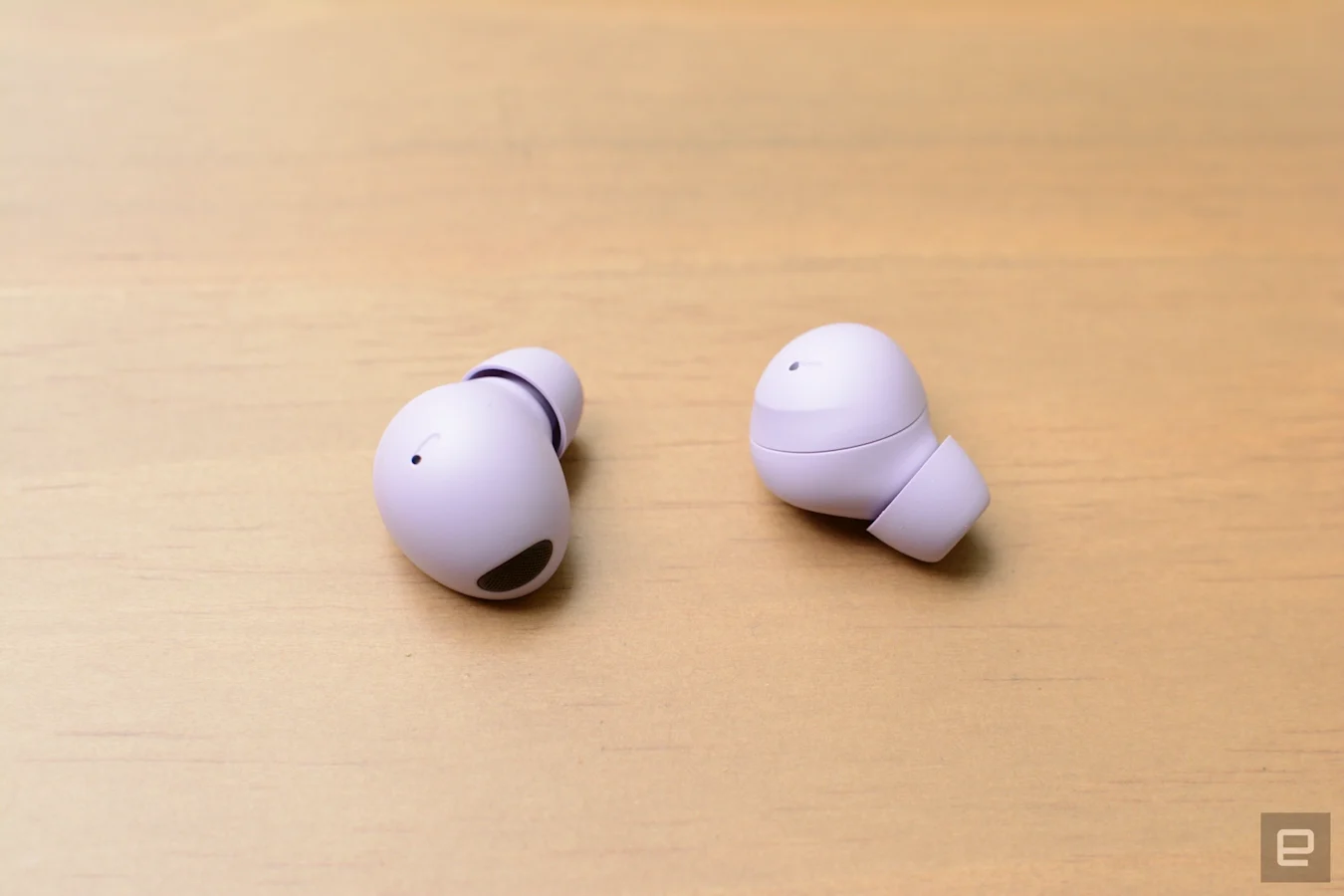
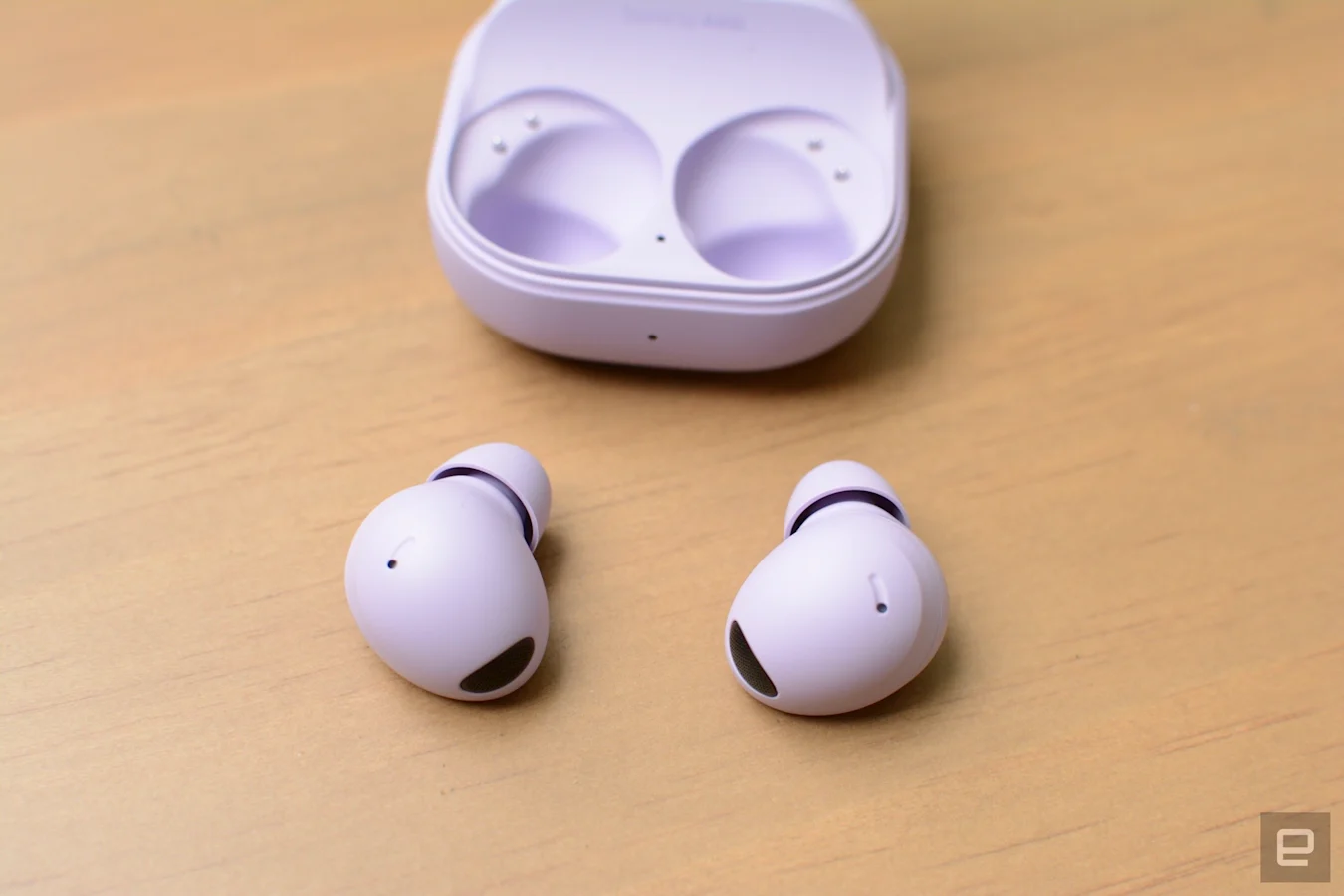
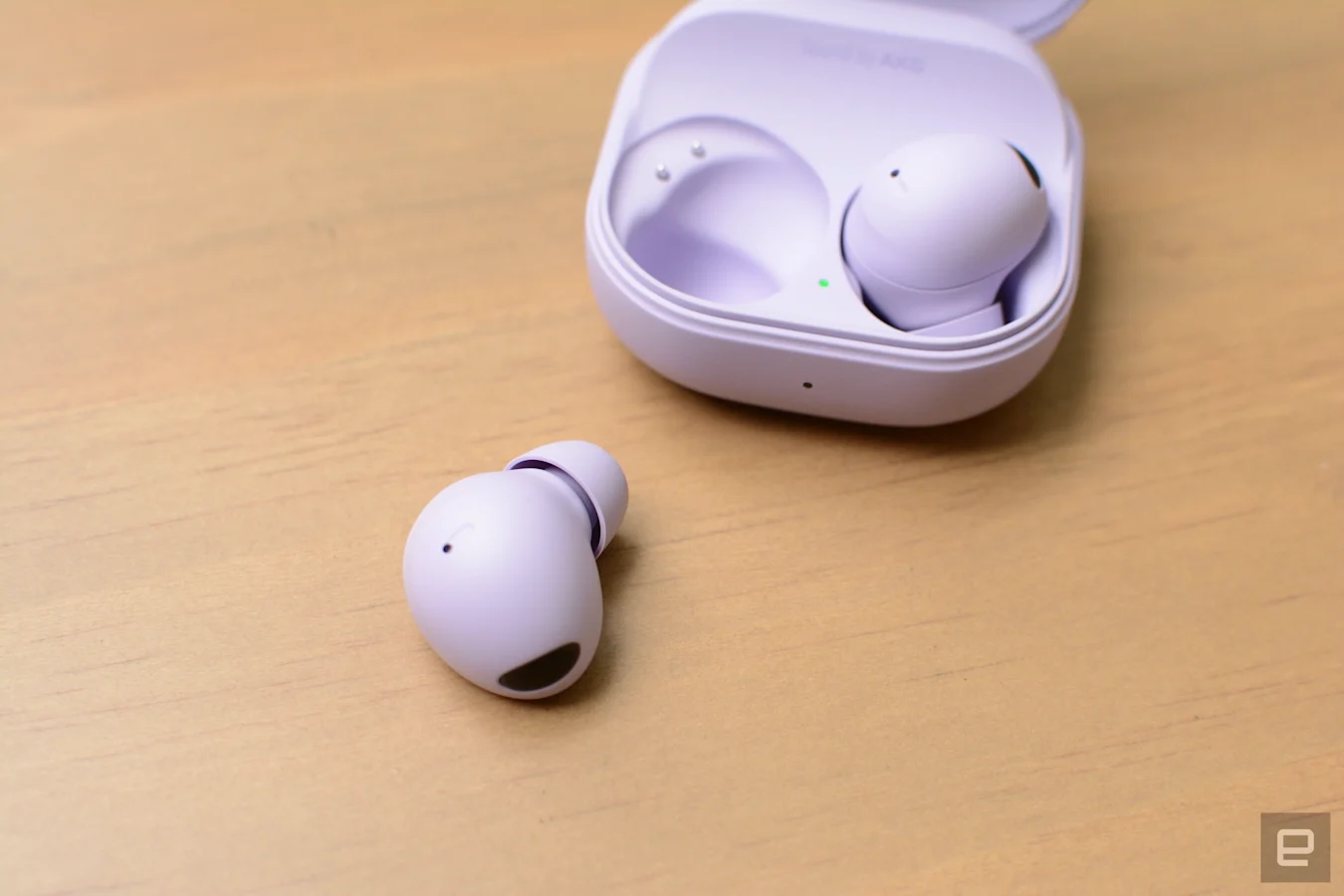
Overall, the Galaxy Buds 2 Pro have a similar design to last year’s Buds Pro, but there are a few notable changes. First, this new model is 15-percent smaller than the 2021 version, which means they fit better in your ear and are more comfortable for longer periods of time. What’s more, Samsung added a vent on the inside of each earbud to help relieve pressure. Of course, the tiny stature means they tuck nicely into your ear, leaving very little sticking out from the side of your head. It’s a design Samsung adopted early on for its earbuds and subsequent models have continued to be satisfyingly svelte.

The Galaxy Buds 2 Pro have a soft-touch matte coating where the Galaxy Buds Pro was a glossy affair. I prefer the former as it’s more pleasant to the touch and isn’t a fingerprint magnet. However, it doesn’t necessarily offer more grip and neither surface impacted the touch controls. The included charging case for the Buds 2 Pro is covered in the same matte finish, so it too is pleasantly tactile. Like the Buds Pro, this model is IPX7 rated, which will allow you to submerge the earbuds in up to three feet of “fresh water” for up to 30 minutes, according to Samsung.

Touch controls are mirrored on both earbuds for the most part. There’s single tap for play/pause, double tap to skip ahead, triple tap to go back and a customizable touch and hold gesture. That long press can be used to change noise controls – ANC/ambient sound, ANC/off or ambient sound/off – or to summon Bixby, activate Spotify or control volume (down on left, up on right). If you don’t want to sacrifice some of those other features for volume, there’s an additional Labs option that will allow you to double tap the front edge of the earbuds to adjust audio levels.

It’s a little tricky to master, but I didn’t have any serious problems with edge tapping once I got the hang of it. The real annoyance with the touch controls comes when you try to adjust the fit of the earbuds. The Buds 2 Pro fit well, but as is the case with all true wireless models, you have to regularly reposition them in your ears. Due to the sensitivity of those touch panels, and the small size of the buds, it’s easy to make an errant tap when you’re just trying to readjust. It happened often enough to become very frustrating over the last two weeks.

Software and features

The Galaxy Buds 2 Pro are Samsung’s best earbuds yet, and it’s not even close. Thanks to a huge improvement to sound quality, better noise cancellation and a host of handy features, this is the most well-rounded true wireless product from the company so far. But even with all of its gains, the best is still reserved for the Samsung faithful, which means these are only a truly great option for owner’s of one of the company’s devices.

Billy Steele/Engadget

Like previous Samsung earbuds, all of the features and settings for the Galaxy Buds 2 Pro are accessible through the Galaxy Wearable app on Android devices. Unfortunately, the company is staying consistent with recent models by not offering an iOS version. Samsung used to have onr, which made its buds a great option for both operating systems, but that hasn’t been the case for a while now. You can still use the earbuds with Apple gear, but you’ll lose some of the more attractive features by doing so.

Inside the app, you’ll get battery percentages for both the earbuds and the case right up top. The main screen also gives you access to noise controls, so you can see which mode is active (ANC, off or ambient sound) and make a change with the software if needed. Just below, there are options for enabling/disabling Voice Detect, 360 audio, touch controls and finding lost earbuds. Voice Detect is Samsung’s new feature that can tell when you’re speaking and automatically activate ambient sound while lowering the audio volume for quick conversations.

By default, the tool will go back to regular levels 10 seconds after you stop talking, but you can set that time to five or 15 seconds too. During my tests, Voice Detect worked well, and it doesn’t seem to be as easily tricked by coughs as Sony’s version of the feature. It also continues to work when I’m connected to my MacBook Pro, not only with a Samsung or Android device. However, I prefer Sony’s method of fully pausing the audio rather than just lowering the volume with its Speak-to-Chat tool. So while it’s handy, Samsung’s co-opting of Sony’s feature isn’t as pleasant to use despite its more accurate speech detection.

Gallery: Samsung Galaxy Buds 2 Pro review | 12 Photos

The Galaxy Wearables app also offers more detailed settings like EQ presets, an earbud fit test, read notifications, hands-free Bixby, ambient sound during calls, in-ear detection for calls, seamless connection with some Samsung devices, neck stretch reminders and Labs features. There is a lot packed into this software. Everything is pretty self-explanatory, but I will note that a second Labs tool is a Gaming Mode designed to minimize latency.

There’s also an Accessibility section that lets you adjust the left/right balance. Here, you can also choose to keep ANC active when you remove one earbud (the Buds 2 Pro turns it off by default) and you can adjust ambient sound volume and tone for your hearing. Some assistance with amplifying environmental audio isn’t new for earbuds, but it’s nice that Samsung offers a degree of customization here.

One item that’s still in the works is LE Audio. Samsung mentioned this during its recent event, explaining that the feature will allow you to capture 360 environmental sounds while you’re streaming or recording. For example, if you’re livestreaming. There weren’t a ton of details shared, other than the feature will arrive later this year. The Buds 2 Pro will also support Bluetooth LE, the next-gen wireless audio standard that’s on the way after being first introduced in 2020.

Sound quality

The Galaxy Buds 2 Pro are Samsung’s best earbuds yet, and it’s not even close. Thanks to a huge improvement to sound quality, better noise cancellation and a host of handy features, this is the most well-rounded true wireless product from the company so far. But even with all of its gains, the best is still reserved for the Samsung faithful, which means these are only a truly great option for owner’s of one of the company’s devices.

Billy Steele/Engadget

Samsung’s earbuds have never really impressed me with sound quality. They’ve ranged from just fine to good, but never truly great. Well, for the first time, the company has wowed this jaded headphone reviewer. The Buds 2 Pro pack plenty of bassy punch with a pleasantly open sound that is both full and filled with details and clarity. The low-end is also deep and nuanced, not just a heavy dose of thundering boom.

Plenty of earbuds offer balanced sound with good bass. What separates the great from the good is usually in the subtle details that can be difficult for something so small to replicate. Samsung does this with a combination of a 10mm woofer for the low-end and a 5.3mm tweeter so the treble cuts through. Across a range of genres, that setup enables stellar clarity and depth, keeping songs layered and immersive rather than compressed and messy. Amanda Shires’ vocals, for example, seem to float on top over every song throughout her latest album Take It Like A Man.

A big piece of the upgraded audio quality is 24-bit/48kHz Hi-Fi sound processing. Samsung’s new Seamless Codec (SSC) allows 256 times more sound data to be transmitted from your device to the Galaxy Buds 2 Pro. On the previous model, 24-bit audio was converted to 16 bit by the time it reached the earbuds. Swiping over to the Android developer settings confirmed that 24-bit/48kHz was indeed coming from the Galaxy S21 FE 5G I used to test the Buds 2 Pro, but there’s no mention of bitrate. That number would be an indication of overall quality.

Adblock test (Why?)

Article From & Read More ( Galaxy Buds 2 Pro review: Big sound in a tiny package - Engadget )
https://ift.tt/gU6qNst
Technology

One UI 5.0 lets you disable RAM Plus, Samsung's virtual RAM feature - SamMobile - Samsung news

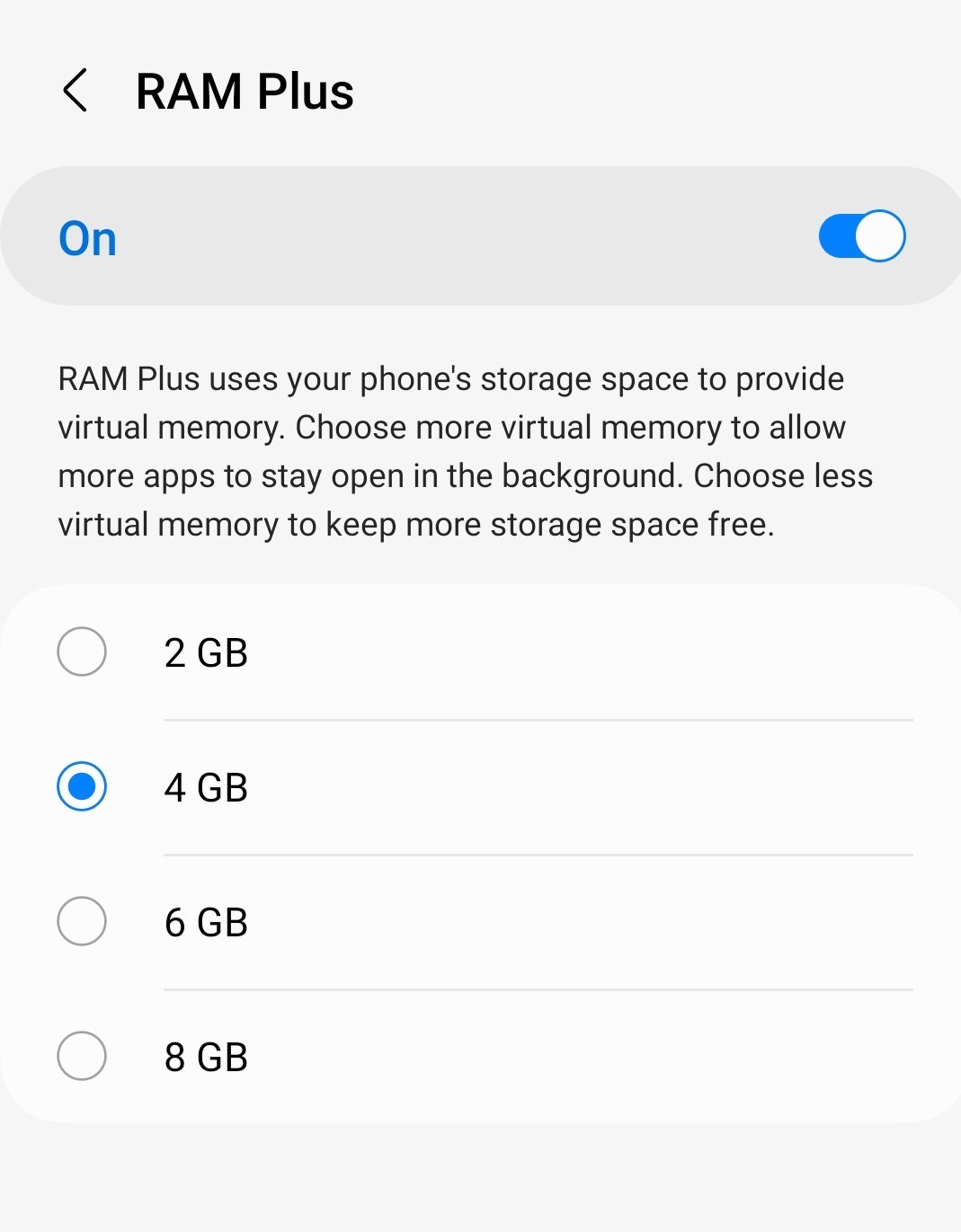
Samsung’s virtual RAM feature for Galaxy smartphones and tablets will improve with the release of One UI 5.0. It seems like every significant One UI update has added something new to RAM Plus, and One UI 5.0 will finally allow customers to disable this feature entirely.

RAM Plus debuted on the Galaxy A52s 5G in 2021, and when it did, it lacked any user options. The feature essentially reserved 4GB of storage to use as virtual RAM by default. Although users couldn’t choose the amount of storage they could convert into virtual RAM initially, Samsung later released One UI 4.1 and updated RAM Plus to give customers this option.

Now, Samsung intends to put even more control in the hands of the users with the upcoming One UI 5.0 update.

One UI 5.0 should allow Galaxy device users to disable RAM Plus

Samsung should soon let Galaxy device users disable RAM Plus if they so desire. This addition was hinted at in the first One UI 5.0 beta firmware but was inactive.

However, the second One UI 5.0 beta update that rolled out earlier this week introduces the option to disable RAM Plus entirely. The process requires a device reboot, and in essence, it allows customers that use Galaxy smartphones equipped with plenty of RAM to save some storage that would otherwise be reserved for RAM Plus.

Keep in mind that some features are subject to change throughout the One UI beta testing period, so there’s no absolute guarantee that the option to disable RAM Plus will be available in the first One UI 5.0 public build once it goes live. But all signs so far point to Samsung wanting to give customers this choice.

Adblock test (Why?)

Article From & Read More ( One UI 5.0 lets you disable RAM Plus, Samsung's virtual RAM feature - SamMobile - Samsung news )
https://ift.tt/nP42avj
Technology

Thursday, August 25, 2022

Corsair's new gaming monitor bends into a curved display - The Verge

Can’t decide between buying a flat or curved monitor? Corsair thinks it might have the solution to your (admittedly, niche) woes with the Xeneon Flex 45WQHD240: a flexible OLED gaming monitor that you can literally bend by hand to switch form factors.

The transforming display is possible thanks to a W-OLED panel from LG Display, which Corsair worked closely with to develop the Xeneon Flex. Interestingly, in contrast to a prototype LG Display showed off at CES last year which used motors to transform between flat and curved modes, Corsair has you manually bend its monitor into shape with a pair of handles that extend from the left and right sides of the display, as this video from YouTuber Bitwit explains. You can even adjust the curvature of the left and right sides of the monitor independently, which is fun, even it’s not entirely clear why you’d want to.

The monitor is an interesting concept, given curved and flat displays tend to be better at different things. Some people prefer flat displays for productivity, as they show a less distorted image and are less prone to magnifying reflections. (Seriously, some people really hate curved displays.) But others like the sense of immersion that a curved screen can offer, particularly for gaming, since, at the right size and distance, the screen tends to fill your entire peripheral vision.

In terms of other specs, Corsair’s monitor is a 45-inch 21:9 ultrawide panel with a refresh rate of 240Hz and a peak brightness of 1000 nits. The Xeneon Flex’s maximum curvature is 800R, but you can pick any curvature that suits you. It supports both Nvidia’s G-Sync and AMD’s FreeSync Premium variable refresh rate technologies, and there are a bevy of both front and back connectors including HDMI, DisplayPort, USB-C, USB-A, and a headphone jack.

Corsair’s Xeneon Flex isn’t quite a world’s first, as Chinese TV manufacturer Skyworth announced its own flexible transforming TV last year, but the new monitor has a decent chance of being one of the first such devices to see a global release. Unfortunately there’s no word yet on when that might be, or how much we can expect to pay for the privilege. Corsair says more information about launch, availability, and final specs will be announced later this year.

Adblock test (Why?)

Article From & Read More ( Corsair's new gaming monitor bends into a curved display - The Verge )
https://ift.tt/47JIuXZ
Technology

Wednesday, August 24, 2022

Apple is changing a few key iPhone sounds - The Verge

Apple’s upcoming iOS 16 update brings with it a lot of new features — things like the ability to customize your Lock Screen, edit iMessages, or copy written text from a video. But Apple’s also made an under-the-radar change to some of the iPhone’s sounds, which some of us hear at The Verge noticed while using the betas.

When you go to the Find My app and choose the “play sound” option for an iOS / iPadOS 16 device, you’ll now be greeted with what sounds like an electronic xylophone, instead of the pinging sound that played on iOS 15 and before. The change also applies to when you ask your Apple Watch to ping your phone for you, except the sound plays once instead of over and over. One of my co-workers described the new sound as higher pitched and easier to hear, but I’ll let you judge how it sounds for yourself.

Let me just say: I think this sound is way better than the old one. While iOS 15’s radar-like pings are a thematically appropriate soundtrack while I’m searching for a lost phone, the new sound seems fun and playful, like my phone is doing a little “here I am, come find me” dance.

What I don’t love as much is the new Siri activation sound. While Siri’s classic two-note activation beep has been missing for a while (when I say “hey Siri” or hold down the power button on your phone, Siri just waits a moment before uttering a slightly creepy “uh-huh?” or “hmm?”), there is still one place I hear it: when activating the voice assistant while using CarPlay. Now, that tone has been replaced with a softer bong, which I find way less attention-grabbing. While I like the sound, I’m not a huge fan of the fact that it makes me second-guess whether Siri’s actually listening while I’m trying to keep my eyes on the road.

If you’ve made it this far in the story, I think it’s safe to assume you’re interested in the sounds phones make to notify use humans that something’s happening. If that’s the case, you may want to check out our incredible article detailing the history of Nokia’s famous ringtones.

Adblock test (Why?)

Article From & Read More ( Apple is changing a few key iPhone sounds - The Verge )
https://ift.tt/hywz6sv
Technology

Masahiro Sakurai is the latest creator to join YouTube - The Verge

Masahiro Sakurai, the creator of games like Kirby and Super Smash Bros., has revealed his next big project: a YouTube channel. The gaming folk hero teased that he was working on something new earlier this week, and now you can super smash that like button and subscribe to his new channel, Masahiro Sakurai on Creating Games.

As of this writing, there are three videos: one that’s all about the channel, one covering what games Sakurai has worked on (like one of the DS greats, Meteos), and one diving deep about how to use in-game pauses for certain effects (like “hit stop” moments you might see in Smash when landing a punch).

Sakurai, of course, is no stranger to appearing on video; he’s been Nintendo’s primary Super Smash Bros. presenter for years, and consistently finds ways to make even the smallest details about new fighters extremely interesting. Now that he’s done with the mammoth project that was Super Smash Bros. Ultimate, it’s perhaps no surprise that he’s transitioning to a new video series on YouTube.

Sakurai says we shouldn’t expect him to start streaming (sadly) — instead, the videos will be focused on “topics like game development and what makes games fun,” he says in his “About This Channel” video. He’s aiming to keep the videos short, between two and five minutes long.

He’s already teasing that he’ll be able to show some Smash Bros. development builds and design documents that he’s written, so it seems as if we’ll get some rare behind-the-scenes peeks at big Nintendo games. Although Sakurai is running his videos by Nintendo, says the company “isn’t involved in this channel” and that the series is a personal project of his. He isn’t planning to include ads in his videos.

Unfortunately, even Sakurai has to prepare for potential problems that other YouTubers are on alert for. He says that if rights-holders aren’t happy with the footage he includes in his videos, “I’ll do what I can to set things right.” He also expressed some worry that because he’s uploading separate versions of each video in Japanese and English, that could run afoul of YouTube’s duplicate content policies and cause videos to be taken down.

But as you’d expect with any YouTuber trying to get a new series off the ground, Sakurai concludes his about video by asking viewers to hit the subscribe button. While he concedes that’s “a very YouTube thing of me to ask,” he says he won’t be asking again in future videos.

Personally? I couldn’t hit the subscribe button fast enough. I even turned on the notification bell. The videos he’s released so far are fantastic; I had never consciously thought about hit stop before, but now, I’ll be looking for it in every game I play.

After Ultimate, I was content to never ask Sakurai for anything ever again. Now, I’m eagerly waiting for his next video to drop.

Adblock test (Why?)

Article From & Read More ( Masahiro Sakurai is the latest creator to join YouTube - The Verge )
https://ift.tt/vybB0VU
Technology

Search

Featured Post

Apple's rivals aren't happy about its EU App Store changes - Engadget

Last year, the European Union implemented new laws to make big tech open up its platforms to competitors. The deadline for compliance is M...

Postingan Populer